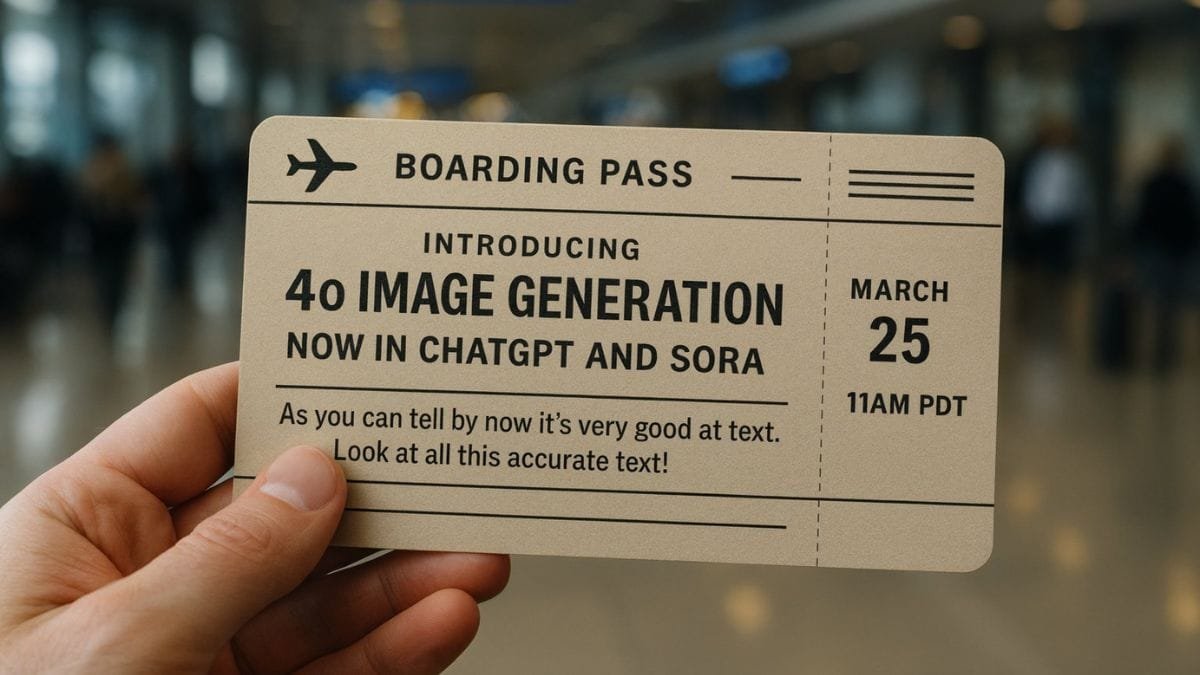
When OpenAI CEO Sam Altman unveiled GPT-4o, the buzz wasn't just about its conversational prowess; it was the stunning leap in native multimodal functionality that truly captured the imagination. Suddenly, the ability to effortlessly generate and edit detailed, realistic images directly within ChatGPT became a reality, unlocking unprecedented Creative and Business Applications of GPT-4o Image Generation. This isn't just about making pretty pictures; it's about transforming workflows, accelerating innovation, and democratizing high-quality visual content for everyone from indie creators to global enterprises.
At its core, GPT-4o is a multimodal powerhouse, processing and generating text, images, and even audio with seamless integration. For visual content, this means vastly enhanced accuracy in rendering complex details, clear and functional text within images, and a heightened ability to interpret nuanced stylistic cues like lighting, mood, and composition. The best part? These sophisticated capabilities are broadly accessible to ChatGPT Free, Plus, Team, and Pro users, making it a game-changer for designers, content creators, marketers, and professionals across the board.
At a Glance: What GPT-4o Image Generation Can Do For You
- Generate High-Quality Visuals: Create detailed, realistic images for diverse needs, from marketing to product design.
- Direct Editing Capabilities: Refine and modify generated images within ChatGPT, speeding up design iterations.
- Multimodal Integration: Seamlessly combine text, image, and audio in your creative process.
- Improved Accuracy: Expect better rendering of complex details, more precise text in images, and consistent stylistic interpretation.
- Broad Accessibility: Available to all tiers of ChatGPT users, democratizing advanced AI image tools.
- Versatile Applications: Ideal for magazine covers, UI/UX, marketing collateral, storytelling, and unique artistic expressions.
Beyond the Hype: Understanding GPT-4o's Image Generation Leap
Before diving into the myriad applications, let's ground ourselves in what makes GPT-4o's image generation so impactful. Previous AI models often struggled with text rendering within images, complex scene composition, or maintaining stylistic consistency across multiple elements. GPT-4o addresses these pain points head-on.
Imagine a world where you can describe a scene, a mood, a specific product detail, and have a high-fidelity image materialize almost instantly. This isn't just about producing volume; it's about precision. The model's enhanced understanding of natural language allows it to translate intricate prompts into visually coherent and compelling outputs. Whether it’s a specific camera angle, the texture of a material, or the subtle emotion on a character's face, GPT-4o aims to deliver. This precision makes it an invaluable asset for anyone looking to refine their visual storytelling or accelerate their design process, much like All about OpenAI 4o image generation explores further.
The Creative Frontier: New Avenues for Artists and Storytellers
For creative professionals, GPT-4o's image generation capabilities open up a universe of possibilities, acting as a tireless creative assistant, a boundless idea generator, and a rapid prototyping tool.
Crafting Magazine Covers that Pop
One of the key testing categories for GPT-4o was emulating editorial photography, with a focus on layout, posing, lighting, and text. For magazine editors, graphic designers, and independent publishers, this means:
- Rapid Concepting: Need to visualize 10 different cover concepts for an upcoming issue? Describe the desired subject, mood, and key elements, and GPT-4o can generate them in minutes. Experiment with varying lighting (e.g., "dramatic chiaroscuro," "bright studio lighting"), poses ("candid laugh," "introspective gaze"), and compositional styles.
- Text Integration: Crucially, GPT-4o can render functional text within the image with minimal errors. This means you can prompt for "a magazine cover for 'Future Tech Monthly' with the headline 'AI's Next Wave'," and expect legible text, not gibberish. This is a massive improvement over earlier models and directly impacts the practical utility for editorial design.
- Personalized Content: Imagine creating bespoke magazine covers for different reader segments, perhaps showcasing a local hero for regional editions or tailoring imagery based on demographic data.
Visual Storytelling: From Concepts to Comic Panels
Storytellers, whether novelists, screenwriters, or game designers, can use GPT-4o to bring their narratives to life visually.
- Character and Scene Development: Generate detailed character portraits from textual descriptions, ensuring consistency in features across multiple images. Visualize key scenes and settings to better understand the atmosphere and blocking.
- Pre-visualization: For filmmakers and advertisers, GPT-4o can rapidly produce storyboards or concept art, turning script descriptions into visual frames. Imagine generating a "breaking news shot" of a catastrophic event or a "moment before a mishap" in a comedic scene—all to refine your vision before expensive production.
- Unique Art Styles: Experiment with different artistic styles, from "photo realistic" to "oil painting" or "futuristic cyberpunk," to see how your story might translate visually, aiding in early-stage conceptualization.
Whimsy and Entertainment: Unleashing the Absurd
The "Hilarious Realistic Animal Acting like Humans" testing category highlights GPT-4o's ability to inject humor and personality into visuals.
- Meme Creation: Generate viral-ready content featuring animals with believable human emotions and actions, perfect for social media managers or digital artists. Think of a grumpy cat pouring coffee or a dog conducting an orchestra.
- Children's Book Illustrations: Create engaging and expressive characters for children's stories, bringing fantastical elements to life with accuracy and charm.
- Brand Mascots: Develop unique and memorable mascots for brands, exploring various scenarios and expressions to find the perfect fit.
The Business Imperative: Driving Value and Efficiency
For businesses, GPT-4o isn't just a creative toy; it's a powerful tool for efficiency, market differentiation, and enhanced customer engagement.
UI/UX Design: Prototyping at Lightning Speed
GPT-4o's capability in generating "professional website layouts reflecting branding and modern design principles" is a goldmine for UI/UX designers and product teams.
- Rapid Prototyping: Designers can prompt for various UI elements or full-page layouts based on textual descriptions of features, user flows, and brand guidelines. Imagine generating a "minimalist e-commerce product page layout with a dark theme" or a "corporate website hero section for a fintech company." This dramatically reduces the time spent on initial wireframing and mocking up.
- A/B Testing Visuals: Create multiple visual variations of a button, banner, or landing page design to test user preferences and optimize conversion rates. The speed of generation allows for more comprehensive testing cycles.
- Branding Consistency: Ensure visual consistency across all digital touchpoints by feeding GPT-4o your brand's style guide and generating assets that adhere to it, saving countless hours for design teams. The future of design tools will undoubtedly leverage such AI capabilities, as discussed in the future of AI in design tools.
Marketing & Advertising: Content on Demand
The core of modern marketing relies on compelling visuals. GPT-4o streamlines this process.
- Banner Ads and Social Media Graphics: Quickly generate a variety of banner ads, social media posts, and promotional graphics tailored to specific campaigns and platforms. Specify dimensions ("square image for Instagram," "horizontal image for LinkedIn") and content ("a dynamic scene of a new SUV driving through a city at sunset").
- Infographics and Presentations: Create engaging data visualizations and compelling slides for presentations. Instead of spending hours on stock photo searches or custom illustrations, describe the concept and let GPT-4o generate the visual anchor.
- Product Visualizations: For e-commerce businesses, GPT-4o can generate product mockups or lifestyle shots. Imagine creating "a sleek new smartphone sitting on a minimalist desk with natural light," or "a model wearing a new fashion collection in an urban setting." This can be particularly useful for small businesses without dedicated photography budgets. Integrating AI into your marketing strategy is becoming essential, as highlighted in integrating AI into your marketing strategy.
Corporate Communications & Training: Engaging Visuals for Internal Use
Internal communications, training modules, and corporate reports often suffer from generic or text-heavy visuals.
- Employee Engagement Material: Generate custom imagery for internal newsletters, onboarding materials, or company culture initiatives. Instead of relying on generic stock photos, you can create images that specifically resonate with your company's values and team.
- Educational Content: Develop vivid illustrations for training manuals, e-learning modules, or educational presentations, making complex topics more accessible and engaging.
- Report Illustrations: Transform dense data or abstract concepts in reports into easily digestible visual metaphors, enhancing comprehension and retention.
Mastering the Art of the Prompt: Your Guide to GPT-4o Image Generation
The power of GPT-4o lies in its interpretation of your input. To unlock its full potential, you need to become a skilled "prompt engineer." Think of it less as giving commands and more as directing a photoshoot or movie scene.
1. Be Specific, Not Vague
Vague prompts lead to generic results. The more detail you provide, the better GPT-4o can understand your vision.
- Actions: "A person leaping over a puddle," not "a person near a puddle."
- Emotions: "A child with a gleeful expression," not "a happy child."
- Locations: "A bustling marketplace in Marrakech at dusk," not "a market."
- Details: "A vintage leather-bound book with ornate gold tooling," not "an old book."
- Lighting: "Soft, diffused natural light coming from a window," not "good lighting."
- Materials: "A statue carved from rough-hewn granite," not "a stone statue."
- Aspect Ratio: "Vertical image," "horizontal image," "square image." This is crucial for intended use (e.g., social media stories vs. website banners).
Example: - Weak: "A dog running."
- Strong: "A golden retriever sprinting through a sun-drenched field of wildflowers during golden hour, mouth open in a happy grin, horizontal image."
2. Leverage Style Keywords
Injecting artistic or photographic styles guides GPT-4o towards a particular aesthetic.
- Artistic Styles: "Minimalist," "cubist," "impressionistic," "surrealist," "pixel art," "watercolor painting."
- Photographic Styles: "Photo shot," "realistic," "cinematic," "editorial photography," "documentary style," "noir film aesthetic."
- Design Styles: "Flat design," "skeuomorphic," "material design."
Example: - "A lone tree on a hill, oil painting style, vibrant colors, stormy sky."
- "UI/UX design for a cryptocurrency dashboard, futuristic minimalist style, dark mode."
3. Anchor with Real-World Scenarios
Using relatable situations helps GPT-4o contextualize your request.
- "A press conference with a politician addressing reporters."
- "A lively birthday party scene with people laughing and blowing out candles."
- "A bustling coffee shop during morning rush hour."
Example: - "Capture the tension of a moments before a mishap scenario: a chef juggling too many plates, inspired by a busy restaurant kitchen."
4. Control Composition and Camera Angles
Direct GPT-4o like a cinematographer or photographer to achieve specific visual dynamics.
- Camera Angles: "Low-angle shot," "bird's-eye view," "close-up," "wide shot," "dutch angle."
- Foreground/Background: "Blurred background," "prominent foreground object," "subject in the mid-ground."
- Lighting: "Dramatic backlighting," "soft Rembrandt lighting," "harsh overhead light."
Example: - "A majestic eagle soaring over a mountain range, low-angle shot, powerful wings spread wide, sun glinting off its feathers, cinematic style."
5. Avoid Overloading, Embrace Clarity
While specificity is key, don't cram too many complex ideas into a single, run-on sentence. Break down complex ideas into separate phrases, often using commas or "and."
Example:
- Less effective: "A vibrant city street at night with neon signs and rainy reflections and people walking and taxis driving and tall buildings."
- More effective: "A vibrant city street at night. Neon signs glow, reflecting on wet asphalt. Pedestrians with umbrellas. Yellow taxis blur past. Tall, illuminated skyscrapers loom in the background."
6. Test Variations Relentlessly
The nuance of language means that slight changes in wording can produce dramatically different results. Don't settle for the first output.
- If "happy dog" isn't working, try "joyful canine," "dog with an ear-to-ear grin," or "exuberant retriever."
- Experiment with synonyms, rephrasing, and adding/removing details. Iteration is key to refining your vision. Mastering prompt engineering is a skill that will only grow in value, as explored in mastering prompt engineering.
7. Think Visually: Direct a Photoshoot in Your Mind
Before you type, close your eyes and imagine the image you want to create. What would you tell a photographer or a film director?
- "Zoom in here."
- "Show me the texture of this."
- "Make the lighting soft and warm."
- "I want a sense of movement."
- "The subject should be off-center."
This mental exercise translates into clearer, more effective prompts.
The Nuance: Clear Text, Accurate Moods, Emotional Resonance
Beyond just generating images, GPT-4o's real breakthrough lies in its ability to understand and deliver on subtle human elements.
- Functional Text Rendering: No more gibberish! If you ask for a sign or a book title within an image, GPT-4o strives for legible and accurate text, which is revolutionary for marketing materials, UI elements, and editorial content.
- Accurate Moods: The model is better at interpreting emotions and atmosphere. Prompt for "a poignant moment of reflection" or "a tense standoff," and the resulting image will likely convey that sentiment through composition, color, and character expression.
- Realistic Interactions: When multiple subjects are in an image, GPT-4o demonstrates a greater understanding of how they might interact, making scenes feel more natural and believable.
- Emotionally Resonant Characters: The ability to render characters with nuanced emotions means storytellers can create visuals that truly connect with an audience, fostering empathy and engagement.
These improvements—more precise prompt accuracy, minimal text errors, and better stylistic precision in lighting, mood, composition, emotion, and camera angle—elevate GPT-4o from a novelty generator to a serious professional tool.
Addressing Common Questions & Ethical Considerations
As with any powerful AI tool, questions naturally arise.
Q: Is GPT-4o image generation truly 'original'?
A: While GPT-4o generates novel images based on its training data and your prompts, the concept of "originality" in AI is complex. It doesn't copy existing images but creates new compositions. Users should always be mindful of copyright when using any AI-generated content commercially, especially concerning brand assets or distinctive visual styles.
Q: Can it generate images of copyrighted characters or styles?
A: GPT-4o is designed with safeguards to prevent the generation of copyrighted material. While you might be able to describe a character in detail, it's unlikely to explicitly reproduce famous copyrighted figures. Always prioritize ethical content creation, which involves understanding the ethical implications of AI content creation.
Q: Are there limitations to its capabilities?
A: Absolutely. While advanced, GPT-4o isn't flawless. It might still struggle with highly intricate, multi-layered scenes, very specific facial feature consistency across many images (though it's improving), or perfect anatomical accuracy in extremely unusual poses. Like any tool, it has a learning curve, and iterative prompting is often necessary.
Q: How does it compare to other image generation AI tools?
A: GPT-4o's strength lies in its deep integration within ChatGPT and its native multimodal understanding. This provides a more seamless user experience for those already using ChatGPT for text or audio. Its improved text rendering and nuanced stylistic control are standout features. Other tools might excel in specific niches (e.g., hyper-realistic human faces, specific artistic styles), but GPT-4o offers a broad, accessible, and highly versatile package.
The Road Ahead: Unleashing Your Visual Potential
GPT-4o's image generation capabilities represent more than just a technological update; they signify a paradigm shift in how we conceive, create, and interact with visual content. For individual designers, storytellers, and creators, it’s an empowering partner, breaking down technical barriers and unleashing creative freedom. For businesses, it's a strategic asset that can accelerate marketing campaigns, streamline product development, and enhance internal communications.
The true magic of GPT-4o isn't just in what it can do, but in what it enables you to do. It encourages experimentation, fosters rapid ideation, and allows you to push the boundaries of your imagination without getting bogged down by traditional production constraints.
So, how will you harness this powerful new canvas? Start small, experiment often, and think big. The visual future is here, and it’s remarkably intuitive. Dive in, and begin shaping the images of tomorrow.